Korean Bibimbap
Highlighted under: International Ideas
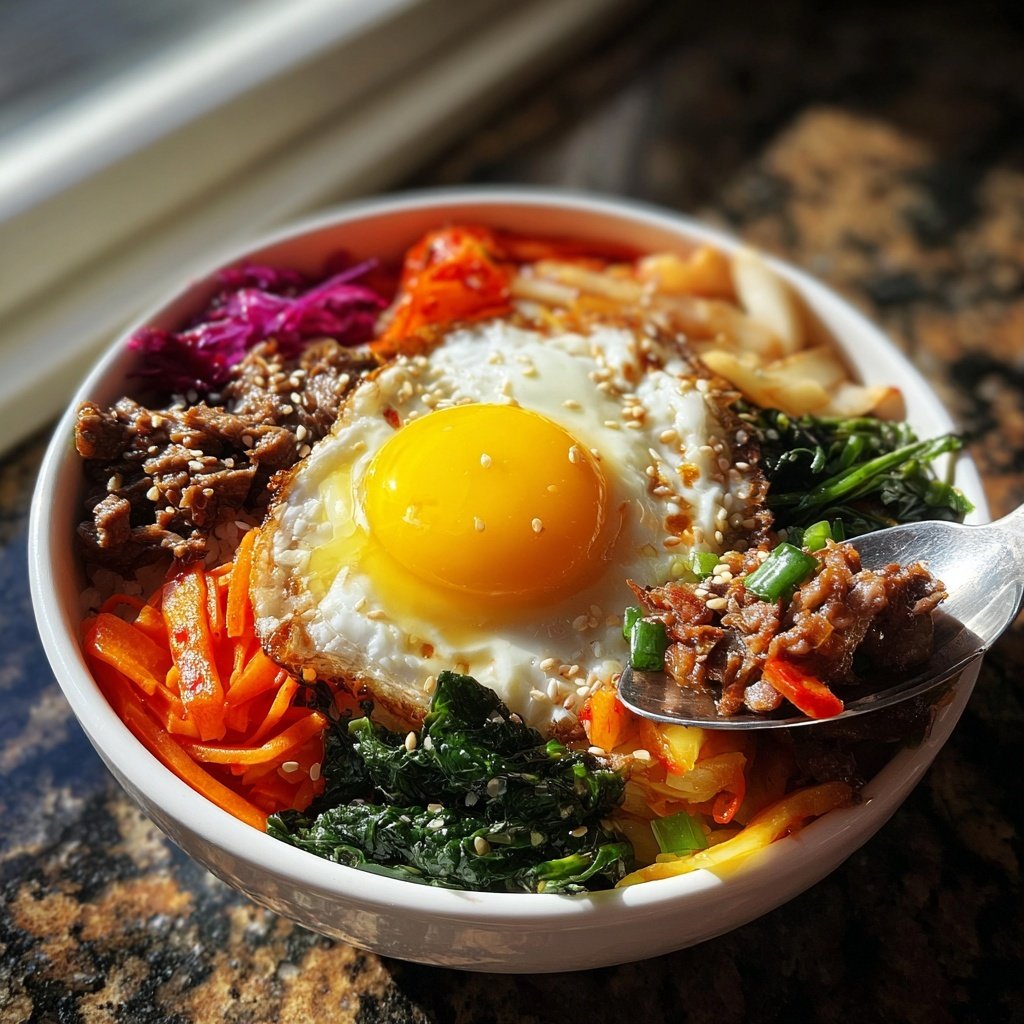
Korean Bibimbap is a vibrant and nutritious dish featuring a mix of rice, vegetables, beef, and a spicy sauce, all beautifully arranged in a bowl.
Korean Bibimbap is more than just a meal; it’s a delightful experience of textures and flavors that represents the harmony of Korean cuisine.
Why You Will Love This Recipe
- Colorful and nutritious ingredients packed into a single bowl
- Customizable with your favorite vegetables and proteins
- Deliciously balanced flavors with a spicy kick from Gochujang
The Origin of Bibimbap
Bibimbap, which translates to 'mixed rice' in Korean, is a traditional dish that has deep historical roots in Korea. It is believed to have originated during the Joseon Dynasty as a way for farmers to use up leftover ingredients. The dish is not only a meal but also a reflection of Korean culture, emphasizing balance and harmony in flavors and textures. Each ingredient plays a significant role, contributing to the dish's overall nutrition and appeal.
Traditionally, Bibimbap is served in a hot stone bowl, known as dolsot, which helps to create a crispy layer of rice at the bottom. This method enhances the dining experience, adding a delightful crunch to every bite. Over the years, Bibimbap has evolved, with various regional variations emerging, showcasing the diversity of Korean cuisine.
Nutritional Benefits
Korean Bibimbap is not just visually appealing; it is also a powerhouse of nutrition. The dish is packed with a variety of vegetables, providing essential vitamins and minerals. Spinach, for instance, is rich in iron, while carrots offer a good dose of beta-carotene. The inclusion of protein from the beef and eggs ensures that this meal is well-rounded and satisfying, making it a perfect choice for lunch or dinner.
Moreover, the use of Gochujang adds a unique flavor while offering health benefits. This fermented chili paste is known to boost metabolism and is rich in antioxidants. The balance of carbohydrates from rice, proteins from beef and eggs, and an array of vegetables makes Bibimbap a wholesome meal option suitable for various dietary needs.
Customizing Your Bibimbap
One of the best aspects of Bibimbap is its versatility. You can easily customize it according to your taste preferences or dietary restrictions. If you're vegetarian or vegan, simply replace the beef with tofu or additional vegetables, and omit the eggs. Feel free to experiment with different seasonal vegetables or even add some kimchi for an extra kick of flavor.
Moreover, you can adjust the spice level by varying the amount of Gochujang. For those who prefer a milder taste, a small dollop will suffice, while spice enthusiasts might want to go all out. This adaptability makes Bibimbap an excellent dish for gatherings, as everyone can personalize their bowl to their liking.
Ingredients
For the Bibimbap
- 2 cups cooked rice
- 1 cup spinach, blanched
- 1 cup carrots, julienned
- 1 cup zucchini, julienned
- 1 cup mushrooms, sliced
- 1 cup bean sprouts, blanched
- 1 cup cooked beef, thinly sliced
- 2 fried eggs
- Gochujang (Korean chili paste) to taste
- Sesame oil for drizzling
- Sesame seeds for garnish
Mix and match your favorite vegetables for a personalized touch!
Instructions
Prepare the Ingredients
Blanch the spinach and bean sprouts in boiling water for 1-2 minutes, then rinse under cold water and drain. Julienne the carrots and zucchini, and slice the mushrooms.
Cook the Vegetables
In a skillet, sauté the carrots, zucchini, and mushrooms separately in a bit of sesame oil until tender. Season with salt to taste.
Assemble the Bibimbap
In a large bowl, place the cooked rice at the bottom. Arrange the blanched spinach, sautéed vegetables, bean sprouts, and sliced beef on top of the rice.
Add the Eggs and Sauce
Top each bowl with a fried egg. Drizzle with sesame oil and add Gochujang to taste. Sprinkle with sesame seeds for garnish.
Serve and Enjoy
Mix everything together before eating to enjoy the full flavor of the Bibimbap!
Feel free to customize the toppings based on your preferences!
Pro Tips
- For a vegetarian version, substitute beef with tofu or additional vegetables.
Tips for Perfect Bibimbap
To achieve the best texture and flavor in your Bibimbap, it’s crucial to prepare each ingredient separately. This method allows you to control the cooking time and seasoning, ensuring that every component is cooked to perfection. For instance, cooking the vegetables just until tender helps retain their vibrant colors and crunch.
Additionally, using day-old rice can enhance the dish. Cold rice holds its shape better during cooking and provides a firmer texture. If you're using freshly cooked rice, let it cool slightly before layering it in the bowl.
Serving Suggestions
Bibimbap is typically served as a standalone meal, but it pairs beautifully with various side dishes known as banchan. Consider serving it with some pickled radishes, kimchi, or a refreshing cucumber salad to complement the flavors of the Bibimbap.
For a complete meal experience, consider serving a light soup, such as miyeok-guk (seaweed soup) or a simple broth, alongside your Bibimbap. This adds warmth and richness to the meal, making it even more satisfying.
Questions About Recipes
→ Can I make Bibimbap in advance?
Yes, you can prepare the ingredients ahead of time, but it's best to assemble it just before serving to keep the rice warm and the vegetables fresh.
→ What if I can't find Gochujang?
You can substitute with a mix of chili paste and a bit of sugar, though the flavor won't be exactly the same.
→ Is Bibimbap gluten-free?
It can be gluten-free if you use gluten-free soy sauce and ensure all ingredients are gluten-free.
→ Can I use brown rice instead of white rice?
Absolutely! Brown rice adds a nuttier flavor and more fiber to the dish.

Korean Bibimbap
Created by: Lorna Whitcombe
Recipe Type: International Ideas
Skill Level: Intermediate
Final Quantity: 2 servings
What You'll Need
For the Bibimbap
- 2 cups cooked rice
- 1 cup spinach, blanched
- 1 cup carrots, julienned
- 1 cup zucchini, julienned
- 1 cup mushrooms, sliced
- 1 cup bean sprouts, blanched
- 1 cup cooked beef, thinly sliced
- 2 fried eggs
- Gochujang (Korean chili paste) to taste
- Sesame oil for drizzling
- Sesame seeds for garnish
How-To Steps
Blanch the spinach and bean sprouts in boiling water for 1-2 minutes, then rinse under cold water and drain. Julienne the carrots and zucchini, and slice the mushrooms.
In a skillet, sauté the carrots, zucchini, and mushrooms separately in a bit of sesame oil until tender. Season with salt to taste.
In a large bowl, place the cooked rice at the bottom. Arrange the blanched spinach, sautéed vegetables, bean sprouts, and sliced beef on top of the rice.
Top each bowl with a fried egg. Drizzle with sesame oil and add Gochujang to taste. Sprinkle with sesame seeds for garnish.
Mix everything together before eating to enjoy the full flavor of the Bibimbap!
Extra Tips
- For a vegetarian version, substitute beef with tofu or additional vegetables.
Nutritional Breakdown (Per Serving)
- Calories: 550 kcal
- Total Fat: 20g
- Saturated Fat: 4g
- Cholesterol: 190mg
- Sodium: 600mg
- Total Carbohydrates: 70g
- Dietary Fiber: 5g
- Sugars: 4g
- Protein: 20g